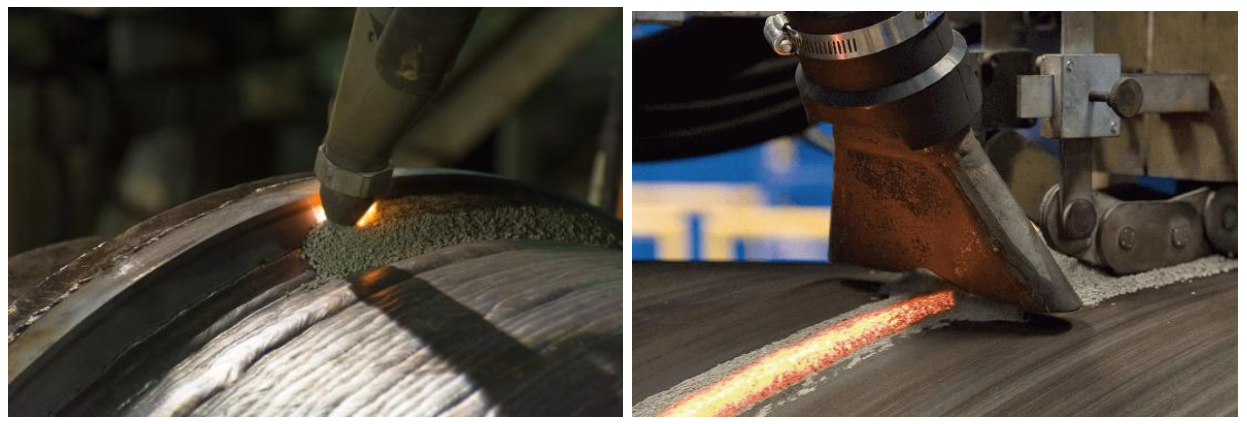
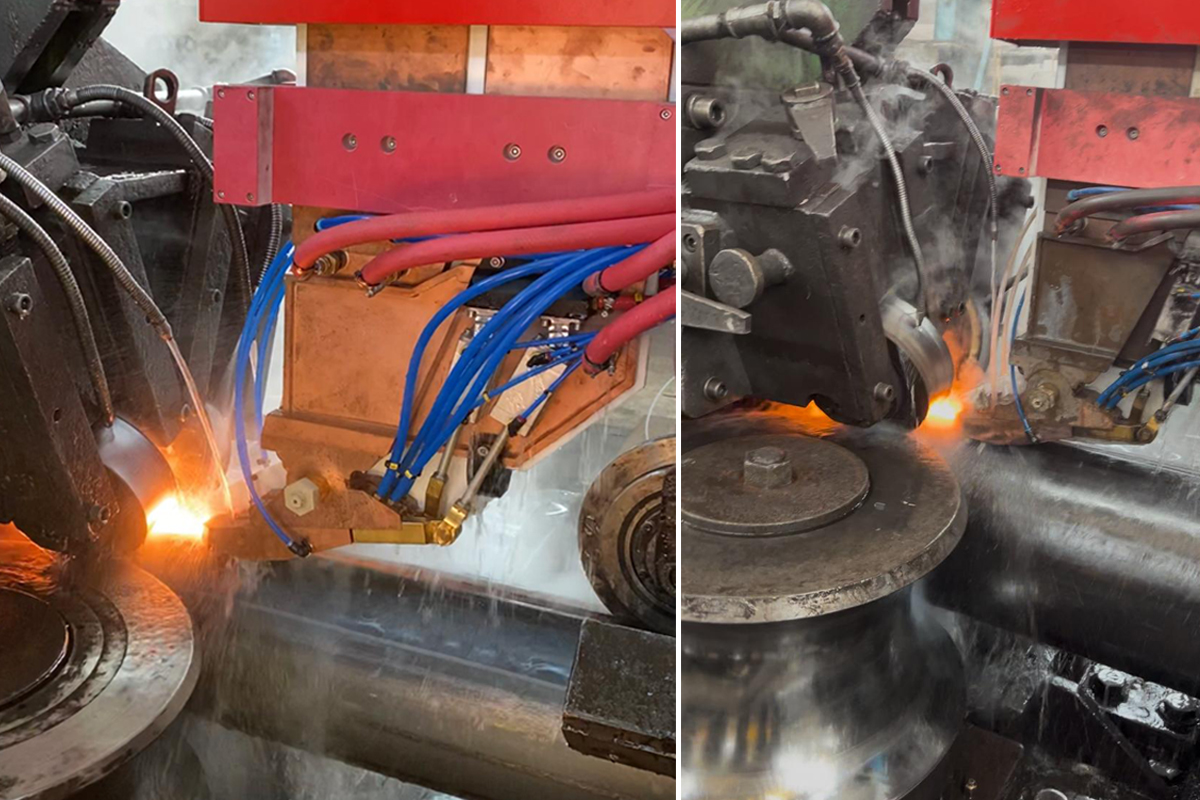
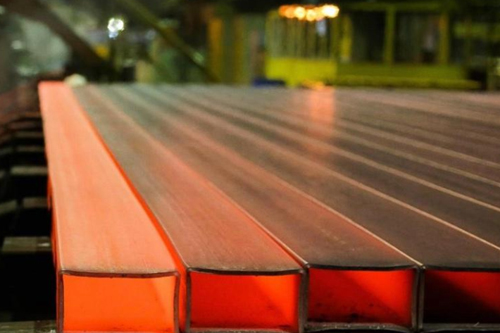
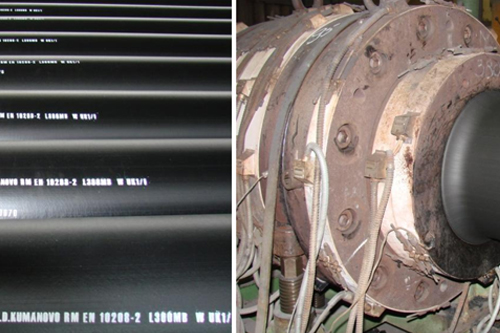
Longitudinal submerged arc welding (SAW) at FZC 11 Oktomvri A.D. is used as a standard welding process in the production of large diameter pipes. These steel pipes are primarily used in main pipelines for the transport of oil and gas, as well as for the transport of drinking water, wastewater and other liquid fluids.
They also find wide application as elements for steel structures, mechanical engineering, etc.
The longitudinal welding process (LSAW) with additional material in the form of steel wire, with a defined diameter and quality depending on the base material, under the protection of an appropriate powder, performed from the inside and outside, provides greater reliability compared to the spiral (HSAW), due to a significantly shorter weld length. This is especially important for gas transportation with high operating pressures, where an increased level of quality control and minimal risk are required.