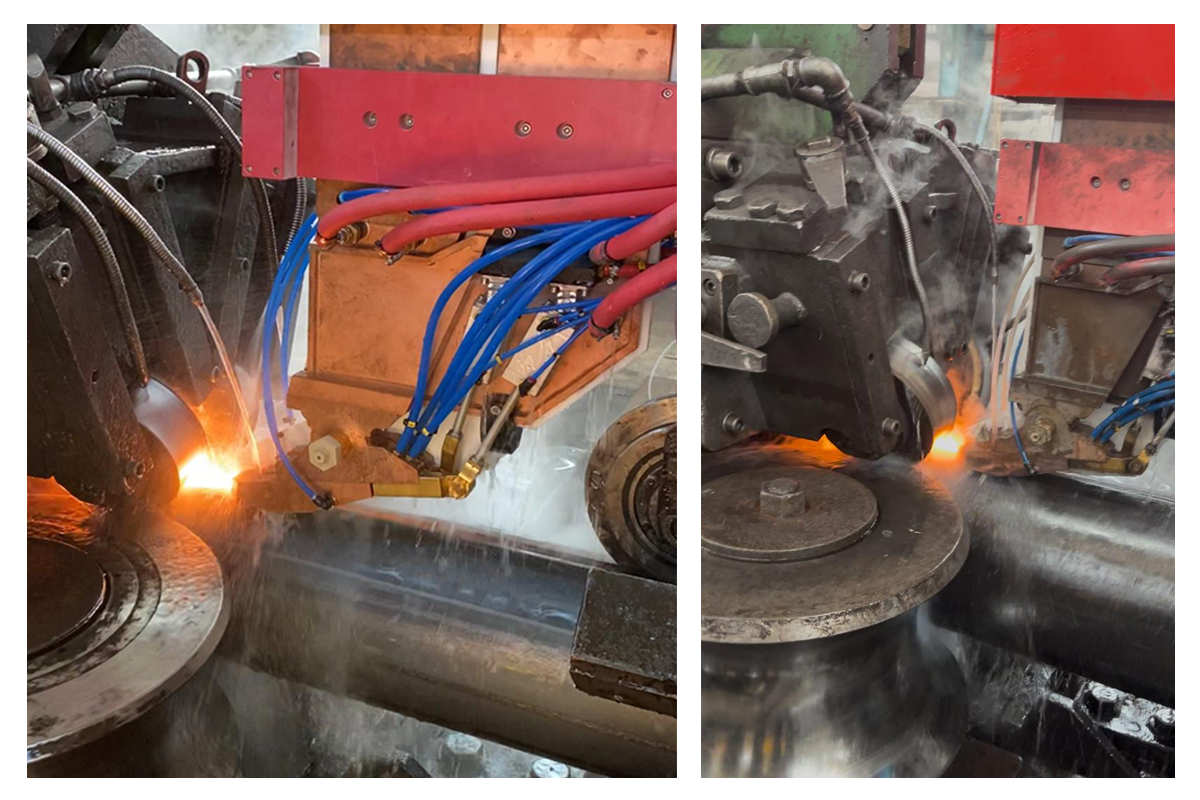
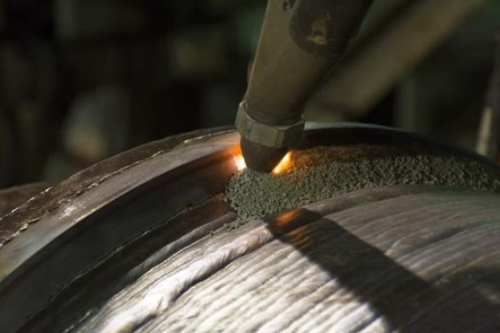
High-frequency electric resistance induction, or conductive welding without filler metal (HFI or HF ERW), are two basic welding processes for the production of steel pipes in the plants of FZC 11Oktomvri a.d., in addition to standard welding with filler metal under powder protection (SAW) .
High-frequency welding is most commonly associated with the welding of steel pipes, although it is also used in various other cases. Alternating current with a frequency of 100 to 800 kHz, or 100,000 to 800,000 cycles per second, is usually used. This electric welding process is characterized by two effects: the skin effect, or surface concentration of the high-frequency current, and the proximity effect, or concentration of the high-frequency current on the close parallel inner edges of the welding wedge in front of the welding point.
These effects allow the welding process to proceed with the smallest amount of heat input, so that the structure of the base material undergoes changes only in a relatively small zone around the central – ferrite line of the weld. The extruded molten material from the inside and outside of the welded joint is removed by scraping devices.